Common Grounds: Razor Sharp Relationships – 10 Risk Taker Tips

Every executive, director, manager and minion is tasked with developing increasing levels of intimacy in right service relationships.  Intimacy?  Yes.  A satisfied customer can become a delighted customer.  A satisfied customer can become a dissatisfied customer.  An emotionally distant and dissatisfied customer is on the way to another shop.  A customer, who is an intimate associate, will stay with you and work through dissatisfaction.  So how do you move customers from fringe relationships to intimate foundational associates?

Like all common grounds notes, this one came from a client.  His particular struggle was intimacy with clients.  That is a tough subject.  Most of us like to separate our business relationships into a compartment of mistrust.  “Caveat vendor” and “Caveat emptor” pervade.  Getting to a trusted win-win relationship confidence assumption requires exposure and intimacy and increasing levels of personal revelation.  Sound risky?  It is.  Risk brings reward.

Trust=Risk=Growth 

A good friend in the business took me into his back office and showed me a project recently that is a highly competitive move for him.  He exposed himself.  He knows I also work with his competitors.  Trust means I can do a better job helping him as I understand his needs and focus.  Trust means no one knows but me what I saw.

With one client, when I took an antagonistic department head into the inner workflow of the shop, I was frozen with fear.  Surely they would tear the client apart in front of some executive over a small disagreement of approach.  On the contrary, they reciprocated and let me into their workflow.  We built a cooperative system of workflow that ended up in our locking shop and customer into a 100% provider relationship.

Another client took me into their private conference room with a group of key decision makers.  This was a culturally and politically tense situation.  Without trust and intimacy this discussion would be over before we started. The executive could lose a lot of face if I did not relate to each person in the group well.  She was staking business strategy for the next three years on this discussion. The pressure was on.  In a few minutes one of the key stakeholders and I discovered a common interest in the field we were discussing and the group took off into a vibrant and open discussion.

“We judge ourselves by our intentions and others by their behavior.”  Stephen M.R. Covey, The SPEED of Trust: The One Thing that Changes Everything

Developing successful relationships from fringe to friend to familiar to faithful to forever is a principle I work to instill in every organization. The Road to Human Loyalty   It applies to staff relationships and customer relationships and community relationships.  There are a few “caveats” in this path and you need to take time to understand them, but they are deeper than starting out with a lack of trust.

So as you work on your plans for the next 18 months and consider your customer relationships here are a few tips.  Sure you will meet some disappointments when you apply them.  However, you will find you gain much more than you lose.

  1. Take time to listen deeply and unplug the filters of prior expectation.
  2. Be slow to judge motivations for the heart is a complicated web.
  3. Give yourself 20 seconds to consider and weigh before you respond to any situation.
  4. Reaction to medicine will kill you.  Response will heal you.  Choose response.
  5. The space between stimulus and response is filled by choice.
  6. Believe in your customer.
  7. Believe in yourself.
  8. Think of ten good actions you could take in response to a request before making a decision when feeling like you are being used.
  9. If you consider all your relationships as well, think again and be realistic.
  10. Do the thing you fear the most, give trust.

ROI - ROE COMMON GROUNDS: These tidbits come out of daily consternations, comments, and concerns of real managers doing what you do.

This article focuses on Sales and Marketing level of the operational pyramid.

Let’s talk: Phil Larson or Shepherd Consulting OK

Common Grounds: Solving Workflow with Leadership

Quality is best managed by leadership.

The conversation with a commercial manager of multiple in-plants was revelatory. His responsibility covered a variety of situations of business and higher education where management had been sourced. Each instance had a mix of team members who were employees of the institution or business and team members working for the commercial sourcing group. Few of us ever have to work in such a complexity. One of the shops experiences continual quality issues. VisionWhat is promised and proofed sometimes does not match what is delivered in color consistency. Every shop has to solve this in their workflow. Yet, no shop can ever claim to have final resolution. Why?

Can quality be 100% managed by workflow? Policy and procedure and process never resolve every issue. It is the team member performing the task that must apply discretion and excellence. Machines glitch. Chemical mixes fail. Papers absorb and dissipate moisture. Files are changed two seconds before a run. People forget to communicate changes. All of these items impact workflow. The finest workflow fit to the greatest team and equipment and software and supplies does not accommodate for all variances or all combinations of variances.

Priority and pressure pre-empt. They do. An angry customer can fluster the best of press operators. A haggard executive can shift priorities on a job in process in order to take care of the urgent. When the job is restarted not all the conditions are the same. What was going to be on time is now threatened as a rush. Content may shift due to final edits and the customer overlooks the slight but critical impact on the final piece as they sign the proof and rush out the door at 4:30pm for a piece due the next morning. “Well you signed it!”, just does not please the customer after they have handed out the goof at their most important meeting of the month.

Quality is best managed by leadership. Some things are taught and some things are caught. Leadership is best taught by being caught. A production team will reflect the tenor and approach of the leader. If you’d like to have impeccable workflow then start with impeccable leadership. What you do in the shadows will be done in the light. How you handle decisions needing discretion will lead them when you are not there.

Proactive: Leadership looks beyond the specific request to the heart of the need. Instead of overlooking a mistake on a proof by a customer, a leader reviews with the customer and asks qualifying questions if something seems amiss. That is caught when a manager does an employee review or barters with a vendor or approves a request for time off. Do you give that example at all times? Then expect team members to apply during production.

Responsible: Leadership is ownership. A leader will listen to a dissatisfied customer, personally apologize whether involved in the job or not, and give a reliable expectation of correction. That is caught when a manager takes the heat for the mistake of another department with no bad remarks.

Supportive: Leadership undergirds in tough times. A leader will stay an extra few minutes to make sure the next shift fully understands the job in process. That is caught when a manager cheerfully goes over to help a customer stuff envelopes when last minute changes threaten a mailing.

Customer Best: Leadership cares. Care means I want the best for the other person. A leader will make sure all the pieces of an order are packed so no damage can happen in shipping.  That is caught when a manager opens the door for someone whose hands are full at the front door of the company.

Summary: Plant management is a 24/7 leadership opportunity. How you live in the hallways will flow over into your shop. Cutting corners with vendor contracts will come out in cutting corners among layout artists. No workflow quality check will replace quality leadership example.

ROI/ROECOMMON GROUNDS: These tidbits come out of daily consternations, comments, and concerns of real managers doing what you do.

 This article focuses on the operations and communications levels of the operational pyramid.

Let’s talk: Phil Larson or Shepherd Consulting OK

Common Grounds: Build Better Budgets with VISION!

Budgets promote vision with numbers. They just do. A lackluster budget process represents a lackluster vision. An engaged budget process with visits to key stakeholders and excitement for new or enhanced offerings brings engagement. A comprehensive budget plan that considers and promotes the vision of your key stakeholders/customers brings good support.

Organizations work through new budgets at different times of year. However, as the New Year approaches you ponder end of year purchases, vendor deals, moratorium weeks, supply arrangements, staff, rent, and a myriad of miniscule items specific to your shop. Do it with vision.

Visibility: GVision - Futureet visible. Make sure the right decision makers understand you are watching out for their needs. Visit, call, listen, and integrate their ideas. Help them see how what you do accomplishes their goals.  Put out a simple brag sheet on some special accomplishments.

Integrity: This is not the time to fudge numbers and hesitate. Admit defeats and mistakes. Project confidence you have plans to go forward and be there. A newer stake holder in a shop walked up to me one day, faced me squarely, and asked, “Are you going to be here for me?” Be there.

Sensitivity: Some of your best stakeholder/customers may be going through a rough budget.  Learn from them. Find ways to creatively assist them through your services. Another may be planning to explode and need more. Find the balance.  Make sure you are not steamrolling past another’s need or vision that catches you in a surprise battle.

Influence: You are who you are. You are the expert in your services. Go ahead and be a little bold. Communicate confidence and concern and competency to your customers. Update them with new ways you can serve them and changes that might affect their future. Take care of your normal alerts concerning mail, paper costs, etc.. Then consider something not as evident and show some proactive interest in their world.

Opinion: This is a good time to be assertive. Don’t be aggressive. Do be assertive. If there is a conversation ongoing that might affect you and your team, put in your two cents. Show you care and show your personal ownership of serving the needs of the organization.

Necessity: Make sure all the necessities of the organization are handled in your budget. It can be easy to look to the exciting items and expansion. That is good. Daily operations must continue performed with excellence. A good in-plant can invisibly handle necessities and become overlooked. Communicate you are printing those 200,000 or 2,000,000 pieces of necessity a month alongside all the extras and expansions.

ROI/ROESummary: Tying dollars in clear ways with visibility, sensitivity, influence, opinion, and necessity can give a total VISION to your budget for decision making stakeholders. They are buried in their own budgets of which you are a line item. Make it easy and supportive for them. When you need the extra push for added software, online systems improvement, facility build out, equipment, training, or people, they will remember you well.

Your budget covers every area on the THRIVE pyramid. Consider them all.

Let’s talk: Phil Larson Shepherd Consulting OK

Courageous Team Focus

Take the time to read this article on team organization I recently published in GCWORLDBIZ.  It will change to the positive your value proposition.

Common Grounds:  Team Structure

Teamwork is not simple and not common. A well functioning team is powerful and poised for growth. Why do you allow areas of your company to operate with dysfunction? Do you realize the power of synergy you lose? Great teams have accountability, adherence, action, and alliance knit into performance and decisions. To adopt the Four As of Team identify where you are.  Executives must lead.

Common Grounds: Razor Sharp Relationships – 10 Risk Taker Tips

With one client, when I took an antagonistic department head into the inner workflow of the shop, I was frozen with fear.  Surely they would tear the client apart in front of some executive over a small disagreement of approach.  On the contrary, they reciprocated and let me into their workflow.  We built a cooperative system of workflow that ended up in our locking shop and customer into a 100% provider relationship”

Read the full article by Phil on GCWORLDBZ

Common Grounds: Razor Sharp Relationships – 10 Risk Taker Tips.

Go back

Your message has been sent

Warning
Warning
Warning
Warning

Warning.

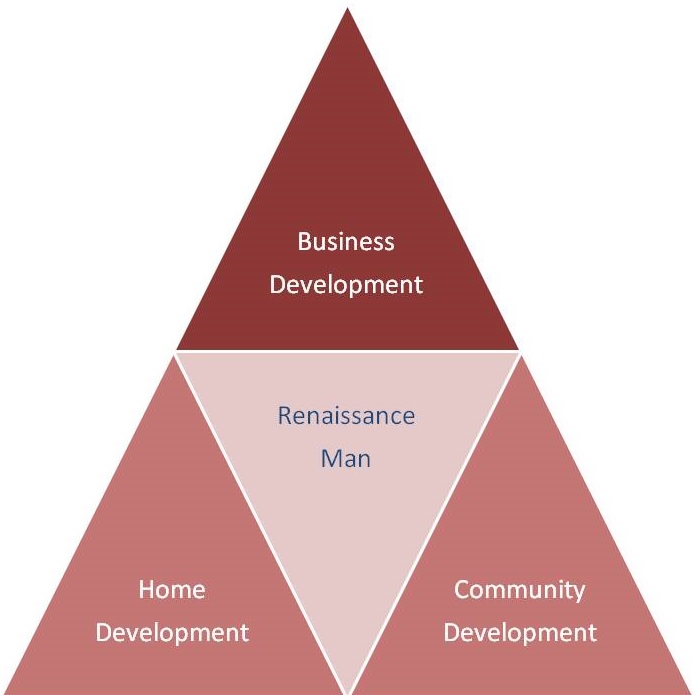
Renaissance Man – There is No Box

Danny DeVito starred in an acclaimed movie entitled, Renaissance Man.   He impacted others to believe outside the restrictions of present systems.  My junior year of university, Dean Musselman tagged me with that title.  As he reviewed my business, psychology, literature, religion, and sociology mix of courses, he both scratched his balding dome and complimented me for being broad in my quest for understanding.  Renaissance leads to revelation.  There is no box.

Wikipedia defines the Renaissance Man as “A polymath (Greek: πολυμαθής, polymathēs, “having learned much”), is a person whose expertise spans a significant number of different subject areas; such a person is known to draw on complex bodies of knowledge to solve specific problems”

renaissanceman

My personal form comes in taking a few keen skills honed over many iterations in business, community, and congregation and offer them to you.  Most of us in our journeys do not discover who we really can be until later in life.  Some find the path early.  Finding and early path to late discovery is a joy.

Excellence in operations and communications really shouts what I want to say to you.  Business, community, and home are fields of prosperity.  Leadership in community (business, government, education, non-profit), leadership in the people services (non-profit, congregation) and leadership in the home (fathers and families) build the environment in which healthy, dedicated, morally and emotionally and socially competent individuals and groups develop in balance and holistic health.

Contact me to assist in improving your business results.

Contact me to assist in improving your non-profit or congregation results:

Contact me to assist in your family results:

Contact me to GET RESULTS.. 405.388.8037 cell/text

Go back

Your message has been sent

Warning
Warning
Warning
Warning
Warning

Warning.


Manage Well: The 3 Questions

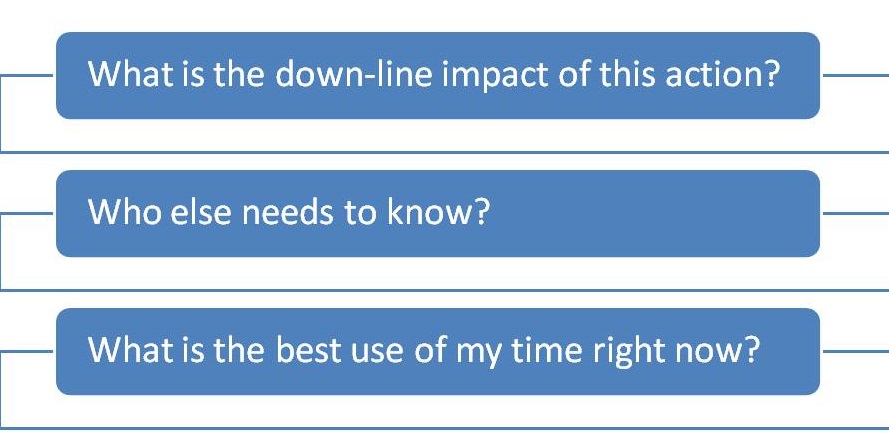
Bring a team into high productivity and positive morale with “The 3 Questions”.  Managers must master these.  Imbed them into your psyche.  Repeat them in your sleep.  Make them your meditational mantra.  Get it.

What is the down-line impact of this action?  How often do you have problems in production or sales or finance because of an inadequate exploration of this question?  What will happen in accounting if we promote this new product line at 5% markdown?  What will happen to other product lines?  Can marketing adjust in time for the sales season?  Will production be ready to handle sales volumes?

Put off this question at maximum risk of failure.  Even the simplest action in a sequence of workflow has to pursue an expanded understanding before change.  If we print this at a new size, will the finishing team be able to handle it?  If we promote a new advantage to our product will it meet compliance guidelines?  When we implement this change to our computer program for billing will it cause extra workload at 3am that affects another unrelated cycle?  There is no end to implications of one actions on other team action.  No one can know them all.  But you need to ask.

Who else needs to know?  How familiar is your team with the interaction of what they do with others?  Do you have workers living in a vacuum?  Have you taken time to educate them about interplay with other departments, people, teams, divisions, customers, and vendors?  When you change the usage of a machine, it might be wise to include the manufacturer in the discussion.  Ask often, “Who else needs to know?”

What is your information plan to include them?  When do they need to know?  Do they have access to enhanced information that might help you make a better decision before advancing?

Work with a production team with large dependency on delivery cycles proved out value here.  The delivery team was constantly a day behind.  They were only being informed at the time of pickup.  By moving the information to them at time of beginning of production, a day was cut out of delivery cycle to the customer and orders increased with increased customer satisfaction.  The sales team also needed to know at the same time instead of being informed only after delivery.  This enabled them to engage the customer along the path with pertinent and reliable information.  Who else needs to know?

What is the best use of my time right now?  After you ask the first two questions, answer this one.  Too often we ask this one and answer it only considering what we know and what we are doing.  We need to consider what others know and what they are doing.  A project launch could falter due to conflicting priorities in the organization.  A customer order may not be deliverable as requested due to a supply shortage and should be renegotiated.  After considering the plans and availabilities of others and related resources, we may want to work on an entirely different project or action and time this one in front of us into another day or week.

Summary Simplicity:   These 3 questions are priceless practice for any manager for self decisions and for training team members in their decisions.  After working with a team for a season on these, you will find they become masters of the top manager rule.  What is the top manager rule?  NO SURPRISES.  These questions eliminate the element of surprise and provide a foundation for a self managed team.

Ask them often.

What is the down-line impact of my action?

Who else needs to know?

What is the best use of my time right now?

Be Busy Building Better Business,

Phil

Phil@shepherdok.com

405.388.8037

Manage Well: Reasonable Price and Trusted Service

If I can do this for a reasonable price, will you do the business with me?

The executive and manager establish thought pattern and policy among service and sales and customer.  Go for reasonable price business.  The bid mentality prevalent in many industries is predicated on being short changed in a transaction.  Reasonable price is predicated on trust, loyalty, and commitment to the good of the customer.  Over time, a reasonable price relationship delivers the best product for a customer at the best price.  Excess people time, unwanted and mismatched goods and services and mistakes decrease.  Major cost savings are engaged.

Meet A Need: Ask this question when working with “bid” mentality buyers before you haggle on pennies.  The question digs to the real trust involved in the transaction.  The question reveals your heart to do the best work for the client at a reasonable cost according to their needs.

Ask this question when working with a trusted client, who has come to you with a bid.

Rule of Respect: Ask this question as a rule of respect and many clients will engage business with you based on trust and your commitment to reasonable pricing and exceptional service.  Both of you will save money as trust is a faster transaction, requires less people involved on both ends, and over time ends up in a continuing lowering of cost based on watching out for the good of your client.

Are You Being Real? Are you coming to me with this business in order to justify an action with someone else on which you have already decided?  Are you bringing this to me as an honest opportunity with a fair chance for me to do the business?  Do I have a chance to establish a trusted relationship with you for other business?

Are You Still With Me?  For the existing client, this could lead to other questions.  Maybe they have lost some trust due to a miscommunication.  Maybe someone has opened a question in their mind about you and your team that needs answered.  Maybe they are just feeling a little neglected or want to express some freedom.  It is worth asking.

Engage The Heart of Service: Many internal organization providers look to get “right of first refusal” or “right to do business within a fixed percentage”.  It amounts to the same question only if your heart of service is fully engaged.  If you are looking to force someone to do business with you through top down edict, they will mistrust you and find an alternate path.  Frustration and lack of liberty in decision making breeds corruption and creative means of policy avoidance.

Reality Check:  One client continually asked for pricing.  This habit was costing us and them.  The cost of estimating many times was more than the total price of the transaction.  They were losing money bidding the items and we were losing money estimating minute work orders.  Our customer service team engaged the “reasonable price” approach.  Since the customer was familiar with our pricing through many transactions, they began to say yes.  This alone cut four or five phone calls out of each transaction.  Then they just moved to ordering with reasonable price expectation.  This cut hours of their time and our time out of each order and moved orders into the production queue many days faster as approvals accompanied the initial request.  People focused on quality and clarity and exactness in delivery instead of pennies.  This customer is a customer for life in a trusted relationship based on reasonable price.

Build business better.  Let me help you.  Phil  405-388-8037  phil@shepherdok.com 

Go back

Your message has been sent

Warning
Warning
Warning

Warning.

Vacation Reverses Progress: Reinforce Routines on Return

After a few days of rest, the human mind plays an ornery trick on managers. Staff members have a frustratingly human characteristic of change reversal. Ignore it and you will continually lose ground. Leadership management considers this rule and makes adjustments to reduce impact.

Here is the rule: Humans tend to revert to the deeply ingrained pattern of behavior that existed prior to the last major change under stress, duress, or rest.

Here is an example: Manager X implemented a new routine for checking work quality in line with the process in March. The results have been good. All staff have adapted and are working under the new approach. Prior to this, many production orders had to be returned to the beginning and rebuilt. The shop standard had been to only check product at time of packing and shipping. Problems at this point required many hours to fix and a great waste in complete orders produced multiple times. The changes implemented to utilize steering controls along the production path had resulted in an 80% reduction in waste as problems were caught in time to correct and make adjustments along the path.

Over the July 4th holiday, many staff members took extra days of vacation and enjoyed themselves immensely. Manager X was surprised and happy to see the team enjoy time with family and friends and morale looked better than in years. But, waste was creeping back up to last year levels and customers were complaining of late orders. On a walk-through, it was obvious that a few of the colleagues were not performing the steering controls that had been implemented and stabilized into the production process. In fact, it seemed that every staff member was skipping some control point at random. The team had reverted to depending on the last check point to catch errors before they impacted the customer.

This was not a purposeful sabotage. This was human nature. Upon return from vacations, orders had picked up. Customers came back from vacation with a backlog of rush orders. Suppliers were slow with needed inventory. The new production checkpoint pattern had not had time to fully integrate into a subconscious activity. The team had been good at performing, but had not subconsciously integrated the process. That takes many months. Each person had reverted to a different pattern of work that was a mishmash of prior procedure and present process.

What To Do? An astute manager is aware of this phenomenon. School systems are working to address this across the United States. They notice students returning from Summer vacations seem to have lost major portions of knowledge they had been taught in the last semester. Some schools have shortened Summer to attempt to address. They may find that the amount of time off consolidated may have little effect on the phenomena. The biggest effect is brain rest and disconnect. That can happen in a few days. The difference between one month and three months is probably negligible. But, what does a manager do? How can he or she keep production running smooth?

1. Get ahead of the vacation curve. Right before a major holiday make a concerted effort to reinforce training on any critical changes made within fours months of the holiday. Bring it fresh to mind and communicate priority immediately before vacation.

2. Notice those on your team that do this most frequently. Spend some time with them on return from vacation or other time off to reinforce changes. Give them time to ask questions and rethink through routines before they run back to the production floor. If you can’t pull them away, at least show up at their workstation and ask how the modified routines are working. Put priority on the changes by asking questions about them.

3. Don’t use banners or wall posters or email to get this job done. Get personal. Presence communicates priority. Your face and voice in the mix will mean a lot and can do a lot to stir good adherence to right routine. Those other methods are okay to reinforce personal involvement, but will never get the job done by themselves.

4. Consider holidays into project plans when implementing major changes. Don’t put a change into place too close to a holiday. Make sure major changes are implemented at least two to three months prior to big holidays, when you know you will have many staff members taking time away from the job. Give people time to integrate change before the rest periods.

Summary: Managers manage change. There are rules of change that are attached to human nature. Ignore them at great pain. Acknowledge them and see better results in your teams.

Build Better Business… Manage Well… Best Wishes, Phil

copy-champtourney

The Road to Human Loyalty- A Forever Journey

“Life does not consist mainly, or even largely, of facts and happenings. It consists mainly of the storm of thought that is forever flowing through one’s head.” Mark Twain

Greatness finds ways to be loyal and extract loyalty from those they serve. It is reciprocal. It is not a given.

Goodness find ways to give and earn respect.

Mediocrity finds ways to get by and fill the role.

You want loyalty above respect. You want to live in greatness. You can live in mediocrity or goodness or greatness. Choose.

Greatness: Every human relationship has the potential to be a great relationship. A customer can be a great customer. A supporter can be a great supporter. A family member can be a great family member. A co-worker can be a great co-worker. A staff member can be a great staff member. Choose. The choice lies in the hands of whoever takes the lead. Lead well. Manage that relationship.

Stages: There are five discernible stages to an effective relationship. Fringe, friend, familiar, faithful, and forever. You may have more, but I find these cross most relationships. In non-profits and congregations, I add a few and change the names around. These five hold. Honor them in building service inside your organization and amazing results transpire.

Fringe: Every relationship starts on the fringe. These are people with whom you have no relationship at all. They do not even know you exist. You may not know they exist. They are out there waiting to get to know you and enjoy your companionship and possibly your service. Respect them as valuable. Honor them. Give them credit for being worthy of dignity and your attention. People are worthy of your attention.

Friend: Somewhere you meet. Someone visits your brick and mortar shop. You talk to a businessman about a new sign. At the bank, you open a new account and meet a representative. Each human transaction can open a friendship. They become more aware of you and you become more aware of them. Being a friend is more than just acquaintance. You exchange information about each other. This exchange opens the next path. Many businesses leave potential customers at this juncture. They know your name and your business but nothing about you and your mission and vision and hopes and dreams and likes and dislikes. Open up and develop this relationship.

Familiar: Now, you have transacted business. This may be with a staff member where you’ve worked on a project. It could be with a customer who has purchased product or service. Maybe you have participated in a class discussion. But, there has been significant exchange requiring trust and revealing of more information. The familiar are more likely to engage at continuing intimacy of relationship and trust. Most people stop in relationships at this level. Customers never become settled. Staff members are held at a distance. Co-workers struggle to fully understand each other.

DANGER! The next two levels are dangerous. They require open-hearted exposure. That is why most never enter into these levels. When you lose a relationship at one of these levels it is painful. To be great, you must risk and receive pain. Go for it. The pleasure of good customer and co-worker relationships at these levels outweigh the pain. Assess the ability to be loyal in customers before you move them up into these ranks. Some customers are just jerks. Sorry. Be cautious. Some supporters are over controlling. Don’t be a fool and risk your organization. Some co-workers need psychologists more than you need them to get too close to the knitting. Advance the best and honor the rest.

Faithful: Over time, the familiar enter into more and more transactions. They become faithful. A faithful customer orders over and over. A faithful co-worker takes and gives advice continually and participates in more and more projects and actions. A faithful supporter reads updates and gives regularly. There is a goodwill and loyalty exchange that has become a given in the relationship.

Forever: Few relationships reach this level. There is a foundational commitment and insider understanding of operations for a business. These are customers for life. You find yourself talking through key business strategies with a foundational customer. A foundational co-worker sees you at your worst and at your best. A foundational supporter in a non-profit understands the mix of vision and mission and can advise on action with your best interest at heart.

Movement: Advancing from fringe to forever should be a pathway for marketing, operations, and activities of any organization. Take time to understand the events, education, information, engagement, transaction, and social touches that assist customers, co-workers, and compatriots in moving along this path. Each of these paths is a continual exchange and deepening of relationship. None should be one way. Have a purposeful plan to advance the best of the best relationships into the Forever circle.

Summary: This is a quick caricature of a complicated subject. Take time to map out your advancement strategies especially with key stakeholders and players in your life. You can have some wonderful moments with Forever people as customers, co-workers, and compatriots.

Remember people are not static.  As much as you invest, at any time an individual may abort the relationship and move to a conflict level or vacate the relationship. That is a risk.  But the joy of good connections outweigh the risks.

Join Champions of Fathering Sept 16th for Lunch and/or Tourney