Teamwork is not simple and not common. A well functioning team is powerful and poised for growth. Why do you allow areas of your company to operate with dysfunction? Do you realize the power of synergy you lose? Great teams have accountability, adherence, action, and alliance knit into performance and decisions. To adopt the Four As of Team identify where you are. Executives must lead.
When Hezekiah, a young twenty-something prayed this prayer, the King of the Universe moved to support him. Read the story in II Kings 18-19.
Why not start your year with a request to the King of The Universe? Write Him a letter. He’s more reliable than Santa, stronger than Superman, wiser than Gandalf and has an army you can’t fathom.
Have a great 2014!
II Kings 19:19 NKJV Now therefore, O Lord our God, I pray, save us from his hand, that all the kingdoms of the earth may know that You are the Lord God, You alone.”
“With one client, when I took an antagonistic department head into the inner workflow of the shop, I was frozen with fear. Surely they would tear the client apart in front of some executive over a small disagreement of approach. On the contrary, they reciprocated and let me into their workflow. We built a cooperative system of workflow that ended up in our locking shop and customer into a 100% provider relationship”
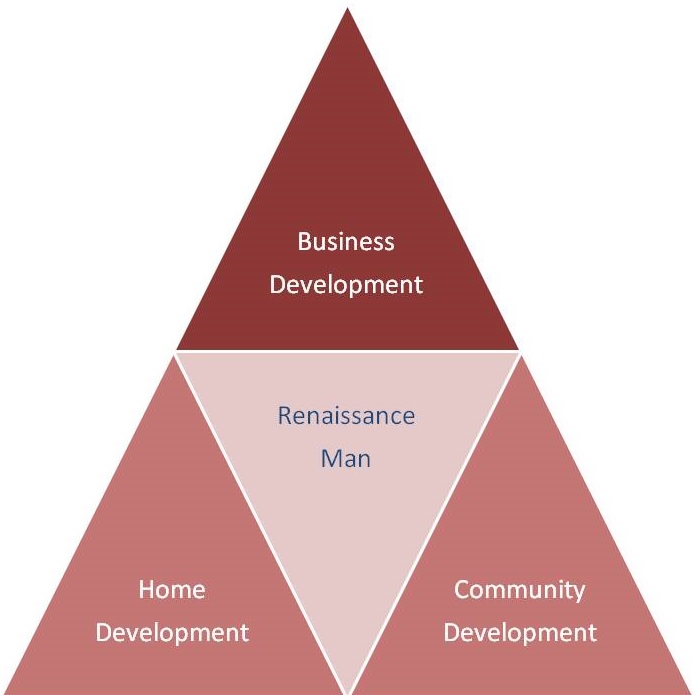
Danny DeVito starred in an acclaimed movie entitled, Renaissance Man. He impacted others to believe outside the restrictions of present systems. My junior year of university, Dean Musselman tagged me with that title. As he reviewed my business, psychology, literature, religion, and sociology mix of courses, he both scratched his balding dome and complimented me for being broad in my quest for understanding. Renaissance leads to revelation. There is no box.
Wikipedia defines the Renaissance Man as “A polymath (Greek: πολυμαθής, polymathēs, “having learned much”), is a person whose expertise spans a significant number of different subject areas; such a person is known to draw on complex bodies of knowledge to solve specific problems”
My personal form comes in taking a few keen skills honed over many iterations in business, community, and congregation and offer them to you. Most of us in our journeys do not discover who we really can be until later in life. Some find the path early. Finding and early path to late discovery is a joy.
Excellence in operations and communications really shouts what I want to say to you. Business, community, and home are fields of prosperity. Leadership in community (business, government, education, non-profit), leadership in the people services (non-profit, congregation) and leadership in the home (fathers and families) build the environment in which healthy, dedicated, morally and emotionally and socially competent individuals and groups develop in balance and holistic health.
Contact me to assist in improving your business results.
Contact me to assist in improving your non-profit or congregation results:
Contact me to assist in your family results:
Contact me to GET RESULTS.. 405.388.8037 cell/text
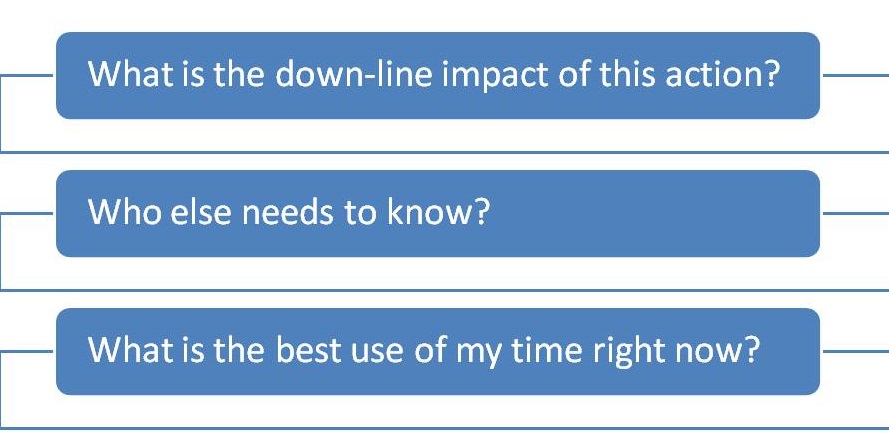
Bring a team into high productivity and positive morale with “The 3 Questions”. Managers must master these. Imbed them into your psyche. Repeat them in your sleep. Make them your meditational mantra. Get it.
What is the down-line impact of this action? How often do you have problems in production or sales or finance because of an inadequate exploration of this question? What will happen in accounting if we promote this new product line at 5% markdown? What will happen to other product lines? Can marketing adjust in time for the sales season? Will production be ready to handle sales volumes?
Put off this question at maximum risk of failure. Even the simplest action in a sequence of workflow has to pursue an expanded understanding before change. If we print this at a new size, will the finishing team be able to handle it? If we promote a new advantage to our product will it meet compliance guidelines? When we implement this change to our computer program for billing will it cause extra workload at 3am that affects another unrelated cycle? There is no end to implications of one actions on other team action. No one can know them all. But you need to ask.
Who else needs to know? How familiar is your team with the interaction of what they do with others? Do you have workers living in a vacuum? Have you taken time to educate them about interplay with other departments, people, teams, divisions, customers, and vendors? When you change the usage of a machine, it might be wise to include the manufacturer in the discussion. Ask often, “Who else needs to know?”
What is your information plan to include them? When do they need to know? Do they have access to enhanced information that might help you make a better decision before advancing?
Work with a production team with large dependency on delivery cycles proved out value here. The delivery team was constantly a day behind. They were only being informed at the time of pickup. By moving the information to them at time of beginning of production, a day was cut out of delivery cycle to the customer and orders increased with increased customer satisfaction. The sales team also needed to know at the same time instead of being informed only after delivery. This enabled them to engage the customer along the path with pertinent and reliable information. Who else needs to know?
What is the best use of my time right now? After you ask the first two questions, answer this one. Too often we ask this one and answer it only considering what we know and what we are doing. We need to consider what others know and what they are doing. A project launch could falter due to conflicting priorities in the organization. A customer order may not be deliverable as requested due to a supply shortage and should be renegotiated. After considering the plans and availabilities of others and related resources, we may want to work on an entirely different project or action and time this one in front of us into another day or week.
Summary Simplicity: These 3 questions are priceless practice for any manager for self decisions and for training team members in their decisions. After working with a team for a season on these, you will find they become masters of the top manager rule. What is the top manager rule? NO SURPRISES. These questions eliminate the element of surprise and provide a foundation for a self managed team.
If I can do this for a reasonable price, will you do the business with me?
The executive and manager establish thought pattern and policy among service and sales and customer. Go for reasonable price business. The bid mentality prevalent in many industries is predicated on being short changed in a transaction. Reasonable price is predicated on trust, loyalty, and commitment to the good of the customer. Over time, a reasonable price relationship delivers the best product for a customer at the best price. Excess people time, unwanted and mismatched goods and services and mistakes decrease. Major cost savings are engaged.
Meet A Need: Ask this question when working with “bid” mentality buyers before you haggle on pennies. The question digs to the real trust involved in the transaction. The question reveals your heart to do the best work for the client at a reasonable cost according to their needs.
Ask this question when working with a trusted client, who has come to you with a bid.
Rule of Respect: Ask this question as a rule of respect and many clients will engage business with you based on trust and your commitment to reasonable pricing and exceptional service. Both of you will save money as trust is a faster transaction, requires less people involved on both ends, and over time ends up in a continuing lowering of cost based on watching out for the good of your client.
Are You Being Real? Are you coming to me with this business in order to justify an action with someone else on which you have already decided? Are you bringing this to me as an honest opportunity with a fair chance for me to do the business? Do I have a chance to establish a trusted relationship with you for other business?
Are You Still With Me? For the existing client, this could lead to other questions. Maybe they have lost some trust due to a miscommunication. Maybe someone has opened a question in their mind about you and your team that needs answered. Maybe they are just feeling a little neglected or want to express some freedom. It is worth asking.
Engage The Heart of Service: Many internal organization providers look to get “right of first refusal” or “right to do business within a fixed percentage”. It amounts to the same question only if your heart of service is fully engaged. If you are looking to force someone to do business with you through top down edict, they will mistrust you and find an alternate path. Frustration and lack of liberty in decision making breeds corruption and creative means of policy avoidance.
Reality Check: One client continually asked for pricing. This habit was costing us and them. The cost of estimating many times was more than the total price of the transaction. They were losing money bidding the items and we were losing money estimating minute work orders. Our customer service team engaged the “reasonable price” approach. Since the customer was familiar with our pricing through many transactions, they began to say yes. This alone cut four or five phone calls out of each transaction. Then they just moved to ordering with reasonable price expectation. This cut hours of their time and our time out of each order and moved orders into the production queue many days faster as approvals accompanied the initial request. People focused on quality and clarity and exactness in delivery instead of pennies. This customer is a customer for life in a trusted relationship based on reasonable price.
Phil is heavily endorsed by professionals and executives in multiple industries as an astute leader and manager. Take a look on linkedin. www.linkedin.com/in/phillarsonokc/
Over the years directly involved in several business improvement initiatives. Helping organizations get to effective and efficient operation in development and daily business is a personal focus.
The economy is in an exciting move forward. You have access to my skills, abilities, partnerships, and knowledge and those of partner groups. The time is right. Spend management, Multi-Channel Marketing, Integrated Cross Media Marketing, and operational engineering. There are so many companies needing to make the move to online sourced print production, whether themselves as the source or others it is an open field.Let me know how I can help you or your clients in moving forward.The focus is now. Your time is right.
Love to work with community wide activities involving government, non-profits, businesses, and congregations especially in the area of fathering and families.
Posting and involvement and opinions are Phil’s and not the opinions of Shepherd Consulting OK or other companies and organizations with which he is affiliated. Just so you know.
Specialties:
Operational Excellence
Reclaiming Business Value
Building and Managing High Performance Teams
Enterprise convergence of print (transactional, office, marketing and sales, training, executive)
Integrated cross media marketing
Developing customer centric customized communications.
Integrating technology solutions into daily operations
Data management in secure and accessible mode
Web to Print
Digital print production
High volume, High efficiency
Distribution spend management
Community activity coordination.
Public speaking
After a few days of rest, the human mind plays an ornery trick on managers. Staff members have a frustratingly human characteristic of change reversal. Ignore it and you will continually lose ground. Leadership management considers this rule and makes adjustments to reduce impact.
Here is the rule: Humans tend to revert to the deeply ingrained pattern of behavior that existed prior to the last major change under stress, duress, or rest.
Here is an example: Manager X implemented a new routine for checking work quality in line with the process in March. The results have been good. All staff have adapted and are working under the new approach. Prior to this, many production orders had to be returned to the beginning and rebuilt. The shop standard had been to only check product at time of packing and shipping. Problems at this point required many hours to fix and a great waste in complete orders produced multiple times. The changes implemented to utilize steering controls along the production path had resulted in an 80% reduction in waste as problems were caught in time to correct and make adjustments along the path.
Over the July 4th holiday, many staff members took extra days of vacation and enjoyed themselves immensely. Manager X was surprised and happy to see the team enjoy time with family and friends and morale looked better than in years. But, waste was creeping back up to last year levels and customers were complaining of late orders. On a walk-through, it was obvious that a few of the colleagues were not performing the steering controls that had been implemented and stabilized into the production process. In fact, it seemed that every staff member was skipping some control point at random. The team had reverted to depending on the last check point to catch errors before they impacted the customer.
This was not a purposeful sabotage. This was human nature. Upon return from vacations, orders had picked up. Customers came back from vacation with a backlog of rush orders. Suppliers were slow with needed inventory. The new production checkpoint pattern had not had time to fully integrate into a subconscious activity. The team had been good at performing, but had not subconsciously integrated the process. That takes many months. Each person had reverted to a different pattern of work that was a mishmash of prior procedure and present process.
What To Do? An astute manager is aware of this phenomenon. School systems are working to address this across the United States. They notice students returning from Summer vacations seem to have lost major portions of knowledge they had been taught in the last semester. Some schools have shortened Summer to attempt to address. They may find that the amount of time off consolidated may have little effect on the phenomena. The biggest effect is brain rest and disconnect. That can happen in a few days. The difference between one month and three months is probably negligible. But, what does a manager do? How can he or she keep production running smooth?
1. Get ahead of the vacation curve. Right before a major holiday make a concerted effort to reinforce training on any critical changes made within fours months of the holiday. Bring it fresh to mind and communicate priority immediately before vacation.
2. Notice those on your team that do this most frequently. Spend some time with them on return from vacation or other time off to reinforce changes. Give them time to ask questions and rethink through routines before they run back to the production floor. If you can’t pull them away, at least show up at their workstation and ask how the modified routines are working. Put priority on the changes by asking questions about them.
3. Don’t use banners or wall posters or email to get this job done. Get personal. Presence communicates priority. Your face and voice in the mix will mean a lot and can do a lot to stir good adherence to right routine. Those other methods are okay to reinforce personal involvement, but will never get the job done by themselves.
4. Consider holidays into project plans when implementing major changes. Don’t put a change into place too close to a holiday. Make sure major changes are implemented at least two to three months prior to big holidays, when you know you will have many staff members taking time away from the job. Give people time to integrate change before the rest periods.
Summary: Managers manage change. There are rules of change that are attached to human nature. Ignore them at great pain. Acknowledge them and see better results in your teams.
Build Better Business… Manage Well… Best Wishes, Phil
“Life does not consist mainly, or even largely, of facts and happenings. It consists mainly of the storm of thought that is forever flowing through one’s head.” Mark Twain
Greatness finds ways to be loyal and extract loyalty from those they serve. It is reciprocal. It is not a given.
Goodness find ways to give and earn respect.
Mediocrity finds ways to get by and fill the role.
You want loyalty above respect. You want to live in greatness. You can live in mediocrity or goodness or greatness. Choose.
Greatness: Every human relationship has the potential to be a great relationship. A customer can be a great customer. A supporter can be a great supporter. A family member can be a great family member. A co-worker can be a great co-worker. A staff member can be a great staff member. Choose. The choice lies in the hands of whoever takes the lead. Lead well. Manage that relationship.
Stages: There are five discernible stages to an effective relationship. Fringe, friend, familiar, faithful, and forever. You may have more, but I find these cross most relationships. In non-profits and congregations, I add a few and change the names around. These five hold. Honor them in building service inside your organization and amazing results transpire.
Fringe: Every relationship starts on the fringe. These are people with whom you have no relationship at all. They do not even know you exist. You may not know they exist. They are out there waiting to get to know you and enjoy your companionship and possibly your service. Respect them as valuable. Honor them. Give them credit for being worthy of dignity and your attention. People are worthy of your attention.
Friend: Somewhere you meet. Someone visits your brick and mortar shop. You talk to a businessman about a new sign. At the bank, you open a new account and meet a representative. Each human transaction can open a friendship. They become more aware of you and you become more aware of them. Being a friend is more than just acquaintance. You exchange information about each other. This exchange opens the next path. Many businesses leave potential customers at this juncture. They know your name and your business but nothing about you and your mission and vision and hopes and dreams and likes and dislikes. Open up and develop this relationship.
Familiar: Now, you have transacted business. This may be with a staff member where you’ve worked on a project. It could be with a customer who has purchased product or service. Maybe you have participated in a class discussion. But, there has been significant exchange requiring trust and revealing of more information. The familiar are more likely to engage at continuing intimacy of relationship and trust. Most people stop in relationships at this level. Customers never become settled. Staff members are held at a distance. Co-workers struggle to fully understand each other.
DANGER! The next two levels are dangerous. They require open-hearted exposure. That is why most never enter into these levels. When you lose a relationship at one of these levels it is painful. To be great, you must risk and receive pain. Go for it. The pleasure of good customer and co-worker relationships at these levels outweigh the pain. Assess the ability to be loyal in customers before you move them up into these ranks. Some customers are just jerks. Sorry. Be cautious. Some supporters are over controlling. Don’t be a fool and risk your organization. Some co-workers need psychologists more than you need them to get too close to the knitting. Advance the best and honor the rest.
Faithful: Over time, the familiar enter into more and more transactions. They become faithful. A faithful customer orders over and over. A faithful co-worker takes and gives advice continually and participates in more and more projects and actions. A faithful supporter reads updates and gives regularly. There is a goodwill and loyalty exchange that has become a given in the relationship.
Forever: Few relationships reach this level. There is a foundational commitment and insider understanding of operations for a business. These are customers for life. You find yourself talking through key business strategies with a foundational customer. A foundational co-worker sees you at your worst and at your best. A foundational supporter in a non-profit understands the mix of vision and mission and can advise on action with your best interest at heart.
Movement: Advancing from fringe to forever should be a pathway for marketing, operations, and activities of any organization. Take time to understand the events, education, information, engagement, transaction, and social touches that assist customers, co-workers, and compatriots in moving along this path. Each of these paths is a continual exchange and deepening of relationship. None should be one way. Have a purposeful plan to advance the best of the best relationships into the Forever circle.
Summary: This is a quick caricature of a complicated subject. Take time to map out your advancement strategies especially with key stakeholders and players in your life. You can have some wonderful moments with Forever people as customers, co-workers, and compatriots.
Remember people are not static. As much as you invest, at any time an individual may abort the relationship and move to a conflict level or vacate the relationship. That is a risk. But the joy of good connections outweigh the risks.
Join Champions of Fathering Sept 16th for Lunch and/or Tourney





 SOLUM SERVICES