Exec/Direct: Effective In House Printing: Customers Are People

Image

Changing Views

A large retailer directed that every time the word “customer” appears in their marketing it was to be replaced with “people”.  Dehumanizing people is a common characteristic of service organizations.  Historical IT organizations like the term “user” for those that come to them for service.  In Plant and other inside department service teams can get lax in how we view those that provide for our livelihood.  Maybe over time the word “customer” has become too common.  Smart organizations serve people.  People need relationship.

Celebrations of 100%

The phone call was from the manager of one my largest customers.  Usually that call meant some service glitch had occurred.  This time it was different.  She called to tell me that her group had been doing 100% of their business with us for the last six months.  She had not told us.  She had just done it.  Her team loved it.  They loved our people.

Could she come and have a surprise party and celebrate with the team?  Her team and my team together?  Of course.  I love the pictures of that moment.  The smiles had taken years of service and listening and adapting.  But here they were.  These moments are repeatable.

Organizations Are Different

In the university organization relationship development with Athletics, Admissions, Administration, Alumni, and Academics brings big results.  A good friend with over twenty years of good success in a private university taught me that cultural specific.  People have cultures and ways of grouping themselves.  Be attentive.  Both at the executive and ordering customer level, this is critical.  Universities have their own culture that needs stroked and attended.

In corporate America relationship development can vary greatly.  But every organization has the C Suite.  CEO, COO, CIO, CTO, CSO, CRO, CMO, and CFO have some commonalities and some differences.  Executives look for risk reduction, human resource optimization, cost containment, budget stability and predictability, and revenue growth.  Those are common concerns.  Yet, ever executive has a focus area.  Marketing, finance, sales, information, security, risk, operations, technology, and the Executive Officer each have nuances of interest alongside the commonalities.  A smart In Plant studies and meets the needs of the executive organization.

Family companies can differ from stock public owned companies.  The dynamics are different.  The people act differently and have different priorities.  Get specific to your organization.

Industries can differ.  An insurance or finance oriented company looks at minute details and tends to attract analytical managers.  A retail organization is geared for change and adaptation.  Smart departments adapt to the differences evident in the people in the organization.

So How Do You Humanize the Customer?

Working with a university in-plant, my estimate is that they can double and even triple effectiveness and “share of wallet” in existing relationships by tuning into the “voice of the customer”.    Too often, we get focused on the differences we have with those that come to us for service.  Why not look at the similarities?  Why not find the connections we have and commonalities?  Humanize your view of the people you serve.

They have a message to deliver to a group and a response they would like.  Whether it is a course pack for a law professor or a direct personalized mailer for a sales organization, there is a reason for the communication going out on paper and a response that is wanted.  Isn’t that what all of us do all day?  We communicate in order to get a response.  Focus on what that person is looking to accomplish.

The people you serve have demands and pressures.  Sound familiar?  The In-Plant is constantly pushed to deadlines.  It is the last lap in a long race for any organization or company.  The people who we serve are under similar pressures to perform.  Relate.

The people you serve have families and lives outside of their work.  When working with one marketing manager, it was joy to listen as she shared about her husband and children and community activities.  They were different priorities than my life, but most similar in many ways.  The relationship built understanding from family to the work place.

Gain Efficiencies on Trust

Steven Covey is known for his premier work on the 7 Habits of Highly Effective People.  His son is known for his work on the Speed of Trust.  Trust built through relationship can enable great communication between “customer” and “service team”.  End to end high speed communication chains in a print service team and customer relationship ensures minimum loss of time and minimum waste in execution.

Enabled service that lives in a humanized relationship with those served provides a value to an organization that is inestimable.  The value of those that serve with the maximum vested interest at heart of those they serve as people not “users” cannot be measured in dollars.  The people served are empowered at a new level that just is hard to convey.  Those people end up bringing double to quadruple the business to the service team.  Maybe you can have a 100% party.

Exec/Direct In-Plant Thrive – Online Optimized

ImageOnline support and pdf workflow stabilization:

The fallacy still exists in the print services industry that you can get by without big feature online services.  You can’t.  Any executive or manager that is looking to improve performance must attend to this item.

A good online and pdf workflow system with right features for customers and production and administrative can drive significant costs out of reworks, job loss to competitors, and lag times on projects.  It also can bring in a constant flow of repeat business and give you a competitive advantage.  You can establish a clear differentiation from competition and integrate your production workflow with the customer workflow.  When they order, you can be the only option on their mind.

Inside the shop, there is an amazing turnaround improvement as wasted hours of looking for information are reduced and the status of every job is known at every moment.

For the administrative team invoice and chargeback information accuracy improves and historical analysis of product mix performance by customer and product type becomes available.

Fear, Uncertainty, and Doubt

Why would you not move into this world?  Confusion over what you need leads the biggest fear factor.  Fear of a long project implementation that fails is another uncertainty area.  Doubt that your team can pull off the project correctly is another block to productive adaptation.

What online support is not.

Online support is not an ftp site with a little file information.  That is primitive and is what most print providers call online ordering.  If that is all you have, you need to move forward rapidly to find a more featured solution.

Online support is not job costing with file attachment.  Again, some have moved a step up the chain and adapted to at least give customers some added information.  However, most of those serving and most of those ordering are fully aware, the price at the delivery rarely matches in these type systems.  Customers need accuracy.

Online support is not an order system that resists integration with the other major processes of a production shop.  This can be frustrating.

What is going on in most shops?

In many shops those three represent the extent of online ordering support for the customer and the staff running the shop.  Every executive and manager can improve services for the organization and for the customers by going into a big feature online ordering support.

What does real online ordering and pdf workflow look like?

Okay, get your pencil out and begin to go over the checklist.  In the next ten years, you will be converted to this way of thinking or you might just not be in the business anymore.  It amazes me how much we resist the power of good ideas.  You need to demand your online software vendor support what you are getting ready to read and you need to demand your in-plant find a cost effective implementation for you.

  1. Online ordering requires acceptance of file upload of supported standard file types.
  2. A good system will archive prior files ordered and allow reorder without reupload.
  3. Catalogue collection and customization by client group.
  4. Variable customization of certain orders for dynamic build of post, brochure, business cards.
  5. Look and feel by client group ordering.  Make it personal for the client.
  6. Tight security and separation of file storage.
  7. Dynamic status of order reflecting whether the order has been moved to press, finishing, or shipped.
  8. Content lockdown with marketing, legal, compliance, and any other customer required approvals.
  9. Great systems have fulfillment for non-print items and high demand print items.
  10. Great systems are integrated into automatic invoicing.
  11. Great systems are integrated into shippers like Fedex and UPS for single reference from order point to receipt by the customer.
  12. Great systems have production integration for the shop so internal service can monitor all orders from a single console.

So, what is keeping the industry from running forward?  Automation leaders like VistaPrint and Shutterfly have proven value of powerful online systems.  Of course, an in-plant is not purposed to serve the world with such product, but they can certainly improve the purpose they serve.  There are some tremendous in-plants that have brought incredible value to their customers and owners through adopting online.

Get with it.  Find a way to implement and milk the value out of online and interactive custom ordering services.

FUD Removers

Yes, you do need to deal with the fear, uncertainty and doubt.

  1. Develop a list of criteria.
  2. Talk to key stakeholders in the customer areas.
  3. Build a shortlist of acceptable vendors with an RFI (request for information).
  4. Produce a product list that would be supported with expected sales growth by product.
  5. Calculate waste reductions with a LEAN DOWNTIME approach.  That is another article.
  6. Go for it and make your customers happy.

Light Bulb Moments – Empowered In-Plant Printers

What was that “light-bulb” moment that had the greatest success on your operation?

People serve people?

Online really does work?

I can help others grow?

Go back

Your message has been sent

Warning
Warning
Warning

Warning.

What Makes A Successful In-Plant Printer Successful?

Finding the right mix of product and service alongside an appreciative customer base helps every in-plant prosper.  Listen as these successful managers tell their stories.  This is one of an insightful series filmed at GraphExpo in 2012.

How can you make the changes needed?

Where will you get the people?

How will you train them?

Product Optimization: Six Core Area For In-Plant Cost Optimization for Executives

ImageProduct Optimization: Six Core Area For In-Plant Cost Optimization for Executives

Design is the fundamental soul of a man-made creation that ends up expressing itself in successive outer layers of the product or service.  Steve Jobs

Love the Product.  Love the Customer.  Love Each Other.  Phil Larson

That mantra has served me well for decades.  Loving your products and services builds professionalism and excellence into all you and your team produce.  Loving your customer causes you to find inventive ways to serve.  You listen and adapt to their needs.  Loving the other members of your production team causes you to believe in them and work to see them grow.  It works together.

Ingenuity inside a performing enterprise takes dedication to the voice of the customer in product optimization. 

One shop had worked for years on shifting priorities of several companies.  A particular product needed in a particular manner eluded their capabilities. Both the people in the company needing service and the people in production were stumped.  Eventually, a bright-minded setup tech invented a plan.  With some modifications in production and some workflow adaptation in order intake and online systems, the product was brought successfully into plant production.  The department saved thousands of dollars a month and reduced lag times on orders.  They also moved from a static mode to a dynamic mode.  They also eliminated the need for a complete position and the person in that position moved up into a higher contributing spot.  What a win-win-win-win!  The production team loved servicing the product line and it filled in for a dropped product line.

Product Optimization is getting the right product mix that is profitable and fit to the location, equipment, and people.  Make it important.  Pricing has to be right.  Prioritization has to be right.  Process has to be right.  Effective turnaround on the products that are bread and butter and keep the shop running day to day has to be protected.

Let’s look at those components of product optimization.

Props: Tools and Technologies

Adding a new product or service can entail huge shifts in people skill base.  There has to be time to build the new skills and knowledge.  Plan it in.  Make sure your budget planning includes expanding tools and technologies and integrating training across teams ahead of product launch.

When implementing UV coating, it became apparent it was not as simple as we thought.  Finishing techs were excellent at folding, perfing, bookmaking and other areas.  UV is almost an art of temperature, paper type, speed , thickness, machine, and coating.  It is certainly a craft where skill, expertise, and art combine.  There were many trials and errors before we could brag about capability.  However, once launched, the demand was continual.

Pricing

Custom work means custom pricing.  Many in-plants are not set up for custom anything.  People who have used the service are used to pay per piece or pay per page or pay for nothing just make the budget work.  That can be limiting when products and services need to be customized for one area though not all need them.  Budgeted hourly rates, production turns, machine setups, people time in workflow, and supplies all have to be put into pricing calculators to then match to market bearing numbers.  This is tough work and necessary.  No one can operate on cost alone.  A fully loaded cost contains many factors including profit.  Profit for an in-plant means allocated dollars for increasing equipment and skill training to always improve for the people you serve.

Pricing reflects value.  Value reflects dignity.  Dignity reflects ownership.  Ownership makes for great results.

A client was ready for custom one-off book production.  Anyone who has ordered a photo book online understands the high dollars charged.  This client balked at even a low charge.  Entitlement thinking had prepped them for simply not having to pay any extra for custom, labor intensive work.  Negotiation and clear-headed thinking prevailed and a new product was co-invented for the client that revolutionized sales results for one company.  The sales teams received access to custom proposals in high quality book form that set them in much higher esteem with prospects.  A simple pricing negotiation between the in-plant and the creative released power for an entire sales team.

Prioritization

Every shop has a mix of people served.  Every business unit served and every department has different business demands and workflows that have to be met and matched.  This balance keeps the symbiotic excellence for a performing enterprise that is so necessary for complete productivity.   New product and altered product requires prioritization changes communicated at every step of the process.

Blow out of your mind the thought of levels of the process when considering priority.  Thinking of levels of people will get you in trouble.  Every person in the process chain needs to understand prioritization of performance in relation to the other items on which they work not “the president wants this right now”.   That form of prioritization is surely necessary at times and managers have to adjust to make it happen while keeping the flow of all the business considered.  An open channel for emergencies has to be in place.  But, the normal flow of product and service has to have a regular prioritization all can understand.

Process

An in-plant with good service means a busy in-plant.  Move one item and five others are affected.  In one plant, we had over 250 steps for each print order.  From file prep to print to finish to distribute to allocate $$, it all had to be done and communicated.

This is a good place to make a note about humanizing services.  A great lesson for me was finding a way to allow the people we served to look into our processes without turning control over to them.  One person loved to walk up to the production team and shift their priorities either through smoozing or scowling.  Neither helped anyone.  I’ll never forget a twenty year professional broken down in my office, nerves shot, and eyes red from trying to serve this person.  The person needed influence, but not in the middle of production processes.  We altered our customer service approaches to be more inclusive of them and others along with spending time communicating our process methodologies.  The interruptive visits went away.

Protection

Our votes(decisions) must go together with our guns (force of need). After all, any vote we shall have, shall have been the product of the gun. The gun which produces the vote should remain its security officer – its guarantor. The people’s votes and the people’s guns are always inseparable twins.  Robert Mugabe

Executives and directors, I encourage you to protect what you value.     You don’t have to pull out a gun to protect prior decisions, but you certainly should think protection.  Decisions have been made with great thought and foresight.  There was force of need that implemented past decisions and force of need that makes new ones.  When you implement change, you need to address protecting prior decisions so the team understands value of loyalty and service.  Otherwise you look petty and political and might make some costly mistakes.

Okay, that is enough thinking on this subject.  The online book can give you more insights.

Next up will be online support and pdf workflow optimization.  If you have an in-plant, Mr/Mrs/Ms  Executive, you must make this happen.

Go back

Your message has been sent

Warning
Warning
Warning

Warning.

Responsibility and Sustainability

Pain Points

Removing Workflow Constraints

Profitable Cost Reduction

Value Add

Removing WorkFlow Constraints = $$$: Six Core Areas of Print Cost Optimization and Efficiency for Executives

ImageEvery organization needs improvementEvery executive needs to perform with velocity and validity.  Velocity means right timing.  Validity means right area.  Over time and travel, it has been my experience that any operation can gain a 25% improvement in costs and performance through some basic approaches.  Most don’t believe it.  That includes the one that just improved.  Yet, most remain semi-productive behind walls of indecision and fear.

The language of growth resistance is well documented. 

  • We’ve done that before and it didn’t work.
  • So and So would never approve that.
  • You don’t understand MY situation, we are different.
  • Oh, that’s just the article of the week program, we don’t need that.

On and on it goes.  The language of fear and resistance is pervasive, stifling, entitlement driven, and deadly in the long run.  It is valid.  Yes, many times each of those statements has been true.  That does not make them true in every situation and certainly does not excuse using them to resist thinking creatively and cooperatively to build new solutions fit to present demands.

WorkFlow Barriers

So, let’s explore the first area where an executive, manager, or director can assist so an in-plant can develop greater value for an organization and move from being a cost to a benefit.  That is the focus.  Get the in-plant into a benefit position for the organization.  Eliminating costs is a dreary and sometimes necessary effort.  Yet, the real focus is to improve the bottom line.  The real need is to broaden the gap between expense and revenue.

You Need Print 

Every organization has needs for print and related services.  The needs vary according to the demands of the recipients of the product or service the organization delivers.  The needs vary based on the methods of marketing and sales and support that are in motion and planned.  Meeting those needs effectively and efficiently and responsibly with attention to compliance becomes the challenge for the in-plant operation.

WorkFlow Release

The first stop on improvement is workflow efficiency.  This area has been overanalyzed in the industry to the point of becoming high centered in detail approaches.  Most plant managers and team members have a great grasp on what could be done to improve efficiency.  Most plant managers and team members do not have a great grasp on how that will improve the service for the people needing access and turnaround.  There is no reason to simply save time and steps.  The need is to gain improvements that return value for people.

Simple, Simple, Simple

Loaded in my phone/camera are pictures of many shops located in many settings.  There are ten times as many of these in the gallery of photos in my mind.  Short ceilings, cramped corners, stacked supplies, dangerous aisles, and overheated equipment plague my mind.  Whew!  How in the world do we get into these situations?  What was that last person thinking when they reduced access to the supplies the operator needs 10 times a shift?  It is not usually expensive to resolve some of these items.  The human factor becomes the biggest blockade.  Convincing people that life can be better and less hectic and reduce costs for the client is the tough road.  Trust me.  Sometimes a little reorganization of equipment and supplies to fit the workload of the current and planned product production can return dollars in reduced bad runs, faster turns, less utilities, and better uptime on equipment to allow increased volume.  Costs go down quickly and morale goes up just as quick.

Smiling Servants Stimulate 

Good morale reduces costs and improves revenue.  In a production shop, parties and warm and fuzzy photo moments are not the quickest way to morale improvement.  Give a production worker the right tools and the right training and a person to serve and get out of the way.  The fastest route to morale improvement is workflow blockage removal.  You need to “get ‘er done”.   Bring on the orders and allow top performers to serve with excellence.

Deadly Organization

In a healthcare campus, our shop was located next to the morgue.  That thought can be quite a downer.  One worker complained when a nurse stepped in and asked her to hold a lifeless baby while she finished other arrangements.  Whew!  Some shops have bigger issues than others.   But worse than the morgue was the fact that the equipment was placed badly for heat exhaust and the air temperatures and volumes needed to operate were inadequate.  The team was in a constant state of fear a piece of equipment would be impacted and production would slow or halt.  No one can be productive living in fear of the unknown.  A little creative rerouting of cooling supply arranged by engineering alleviated the heat overload.  Some quick rearranging of equipment between 2am and 4am one morning brought more air flow sensibility.  An almost no-cost solution gained days a week of equipment uptime and brought pride back to the production team.  The doctors and nurses and administrative staff began getting what they needed to do their jobs more effectively for patients.   New work requests began to flood the shop as reliability of service returned.

Lively Results

Process documentation is not an option.  In an insurance group, we discovered there was no integrated production plan understandable by the entire team.  Every person on every shift had a different interpretation of how to get the job done, what was priority, and who else was to blame for every issue.  No one really knew when work would come out of the shop once it went in.  Ten day turnarounds were not uncommon.  You probably have worked with groups like this.  They are great people buried in an inadequate process built over time and patched together like Frankenstein with each change in organization need and chaos and priority of the day.

You are not going to get the full answer in this short article to how we solved this problem.  But, I will tell you, it was the team that solved it.  I will tell you they began working through point to point touch solutions and tracking.  I will tell you they talked to the people receiving their services and included them in prioritization based on business impact not personal departmental preferences.  I will tell you it takes executive support.

Oh, the team went to 8-72 hour predictable and communicated turnarounds on ten times the volume with the same staffing and equipment levels.  You would love to get that wouldn’t you?  The cost / benefit impact on company overall services became more than the cost to run the plant.  Think this way.  The beginning cost was $2000x and the volume was 1000x.  The resulting cost was $1001x and the volume was 10,000x.  Pent up demand was going to over-sourcers at higher costs.  The unseen expense to the organization of many departments having to arrange outside services couple with dollars buried in hidden budget line items was huge.  It went away.

Rapid workflow benefits your ability to work on the next area.  You can’t get buried in workflow improvements.  It is just one area needing attention.  There is a balance and every area needs attention all the time.  Next, we’ll talk about value add.  It has to improve.

Responsibility and Sustainability

Pain Points

Pain Points in Print Affect Executive Decisions: Six core areas of print cost optimization and effectiveness for executives.

ImageBefore we take a look into the six areas, let’s look at why these areas need addressed.

What is driving this fear of out of control print and media costs?  What worries the executive?  Pain points to the problem.  It does not always point to the solution.

Marketing Disconnects

There is a valid fear among CFOs that continued dollar loss is unavoidable in print and related communications services.  Studies show that in excess of 70% of CEOs distrust the marketing engine.  The inability of marketing and communications areas to relate expenses back to profitable company growth stymies a financial analysis.  Why settle for this?  There are gains to be had.  There are profits to be built and encouraged.  The activity can be and should be measured with a hard look at Return on Marketing.

Media Proliferation

Another pain point is the threat of new media channels and mobilization demands.  Marketers and executives alike tell analysts they are afraid they and their organizations do not understand what they need to know to adapt.  They are thrashing and reading statistics of other attempts in similar organizations in disbelief and despair.  What to do?  Where to start?  How much to spend?  Will the long term value traditionally obtained through customer loyalty and persistency be affordable?  How many channels of communication need to be engaged to be effective?  Which will be life threatening if you don’t engage now even if the expense is unmanageable and lacks decent measurement points?

IT Collision Course

Add to those two the collision of IT and marketing that plagues most companies.  IT has been the technology driver and owner of control of data assets.  A continual emphasis on security and access and controls has made the information inaccessible and hard to understand for most marketers and communicators looking to take deep dives into segmentation and determine relevant categories of buyers on which to focus.  Proliferation of disparate systems within most organizations means the data is not congruently analyzed.  Add to that mess, the data was accumulated for operational purposes not for human communications and conversation and concern.  It is dry and most times irrelevant.  To work in the conversational communications of people to people in which marketing happens, the systems of accumulation and the intelligence behind them must be reworked.  You cannot take a financial programmer and build a human sensitive interactive analyst.  The change does not work in most instances.  Certainly attempting to do it in the speed needed by marketing and communications and sales tasks most companies well beyond the capability of their human resources departments.

Late Adoption of New Media Marketing

Face it.  You’ve waited too long.  The competition is racing and working with new media and you just got your facebook presence online.  It is static and not getting feedback from the right people.  Forget about customers in this world.  Focus on people.  It is people that buy your products.  And they are not talking to you.  You have done something, but it is just not working.  How do you leap frog over the inaction of the last few years when you should have been an early adopter?

Summary and Setup

If you agree with the dilemmas posed above, you know you have to do something about that massive print engine.  It is a powerful tool in the Marketing 3.0 Blueprint.  Trust me.  All those other channels need print to bring them to life.  That is one of the lies of the technology thought base.  If you buy a lie in the beginning, you will suffer and suffer and suffer.  Print is not gone.  It is radically changed.  It is interactive.  It is humanized.  It is responsive and direct and timed.  It is focused and integrated.  Using it in flat and traditional manners will get you decreasing return on your marketing and sales dollars.  You need to optimize the engine and take quick advantage of the power of customization and integration of print media with other channels of communication.  It is not cheaper to skip print.  It is foolish.  Neither is it smart to print like you have been printing.  That won’t work.  You need a new print engine that is dynamic, customized, interactive, data driven, communicative, and humanized.

Next Installment:

We will begin to look at the six core areas that must be addressed in a print engine overhaul to build the powerful and competitive approach for your organization.  You must.

Responsibility and Sustainability

Removing Workflow Constraints

Profitable cost reduction in print and communication services.

pyramid

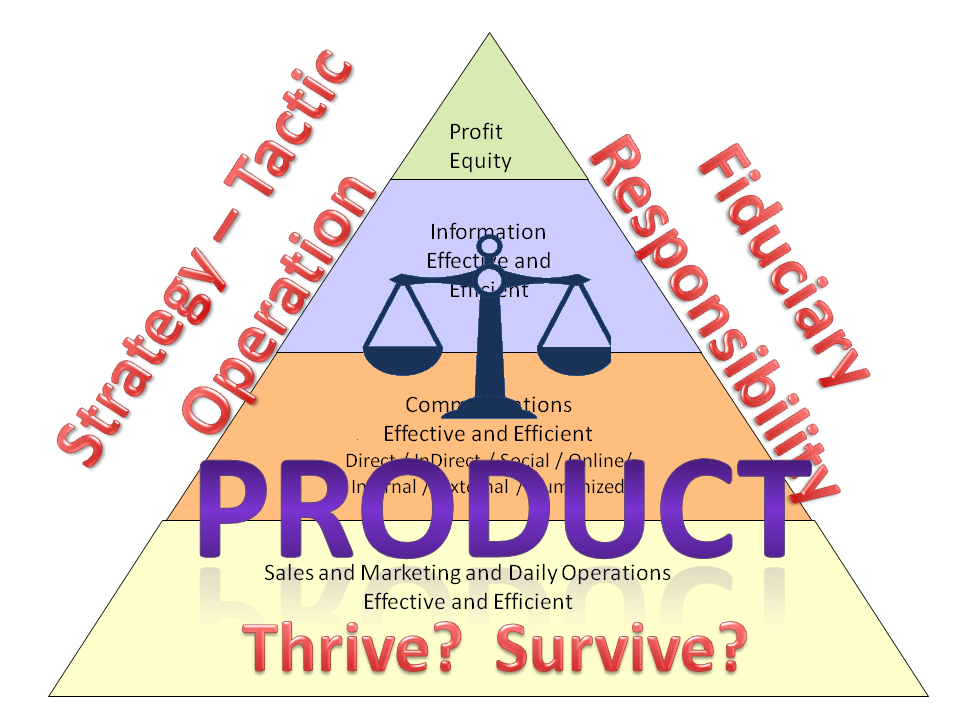
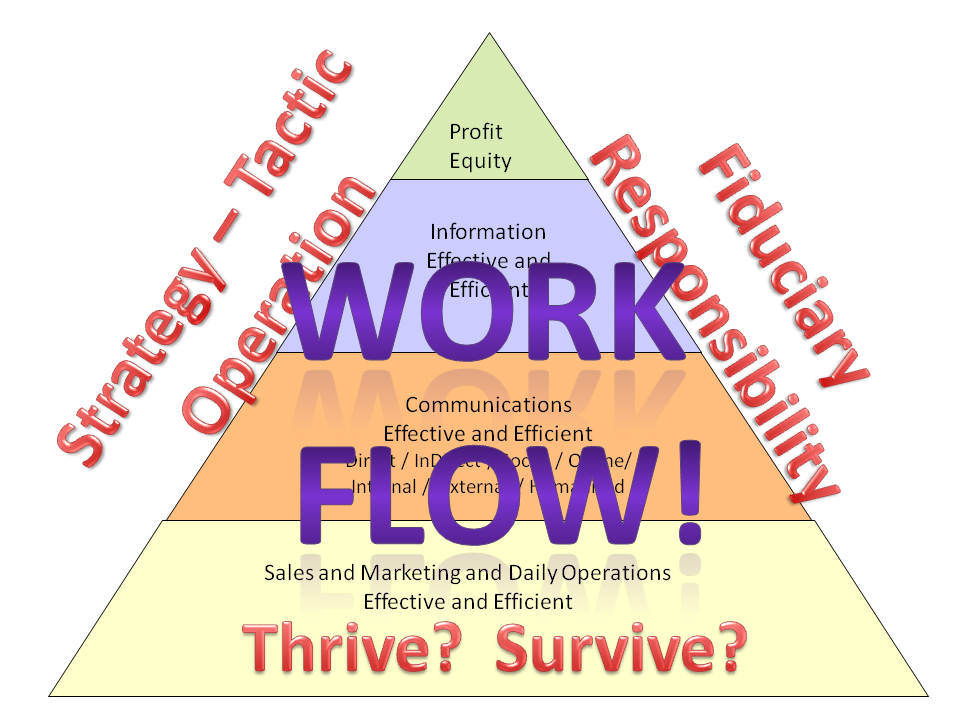
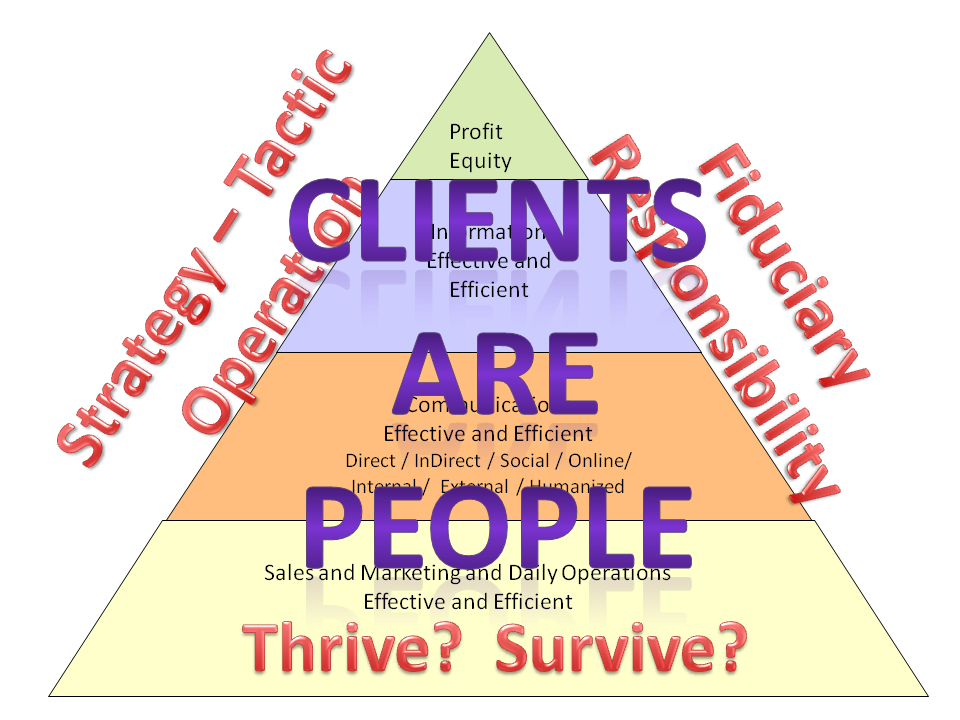
Every executive is tasked with reducing costs and increasing profit.  We can forget.   The press of managing the budget can get tied into just meeting the plan instead of achieving the underlying goals.  An officer has a fiduciary responsibility to increase shareholder equity.  You can’t just “manage the budget”.  It needs to improve impact on the bottom line.

Print services is one of those areas that just seems to take money and not give a return.  That is a shame.  Print services can be such a profit booster, when rightly implemented and attached to corporate initiatives.

Last week my partner and I reviewed two university in-plants.  They were ivy league and state.  In just a few hours we were able to isolate incredible opportunity to both reduce costs and expand profitable services.  You just have to know where to look.

I’ve written quite a lot lately about business plans and new product development.  Those were the subjects taught at GraphExpo and are being reviewed by hundreds of folks daily.  Some of the feedback I get is a need to be able to assess a print services operation and come up with a viable action plan to improve impact on the bottom line.  Too often managers and consultants are looking to survive.  You need to thrive.  There is no reason not to thrive.  The opportunities are amazing.  Over the next few weeks, we’ll explore how to thrive.

There is no reason to just get along.  There is no reason to roll over to conventional strategy of limiting the benefit of your overall communications engine through bad sourcing decisions and coagulation of IT, marketing, and print services.  Where you source your print and communication services is a growth decision not a cost cutting decision.  You can throttle your progress engine by making this decision incorrectly.  Done correctly, you will cut costs, improve service, increase access to effective communications and be a hero.  Done incorrectly, you will cut short term costs and produce blockages in your growth and communications engine and frustrations for marketing and sales and the data miners.  You cannot grow using yesterday’s wisdom in a thriving world of interactive print, direct, indirect, social, online, mobile, and mass virile and viral communications.

Related:

Responsibility and Sustainability

Removing Workflow Constraints

Pain Points

Opportunities to Profit with In-Plants – MyPrintResource.com

Opportunities to Profit with In-Plants – MyPrintResource.com.   REBLOGGED from listed site.

Opportunities To Profit With In-Plants

BY JEFFREY STEELE (/CONTACT/10107135/JEFFREY-STEELE)

CREATED: OCTOBER 7, 2012

Not all is doom and gloom in the world of in-plants.

These are not the best of times for in-plant operations. Many have been shuttered, and those that remain are being scrutinized ever more closely by the

companies and organizations for which they provide printing services. But not all is doom and gloom in the world of in-plants, says Elisha Kasinskas, Marketing

Director for Rochester Software Associates (Booth 237) in Rochester, NY.

“Despite what we hear, every in-plant is not closing,” says Kasinskas, whose company markets workflow software. “But to really thrive, they need to be strategic

components of the organization. That involves being a part of the fabric of the organization, serving on committees, participating in the organization or company

community, and actively seeking business for that organization.”

Phil Larson, President of the consultancy Shepherd OK in Oklahoma City, calls this “an incredibly exciting time” for in-plants that are amenable to evolving.

“You almost have to learn a new business,” he says. “You have to be able to relate to the executives and to the marketers. You have to adapt.”

Opportunities to Profit with In-Plants – MyPrintResource.com   <<<<<<Read the rest….

Starting Fresh – Get an innovative pop to your great insurance marketing idea.

Every marketing initiative starts with a fresh idea.   Somewhere either a brainstorm erupted in a private time or meeting or a customer voiced a need and you awakened.

What do you do with that fresh idea?

Do you run rampaging through your team and ask them to “get on it!”?

Do you get tied up in a single sale and miss big movement?

Do you thoughtfully consider your options and begin analysis never to come to a conclusion?

Do you gather a group of agents and brainstorm?

Do you pay an exorbitant fee to an advertising agency to develop it for you?

Do you throw the idea out on the internet to one of a thousand groups on linkedin or g+ or a blog?

How can you get this thought blurb from being  just an idea to something that will potentially produce income and generate qualified leads for you as a marketer of your services?

Okay here is a new and quick tool to help.  It doesn’t do it all, but pretty close.

Blog | Big Dog Innovations | Your Marketing Department’s Secret Weapon http://bgdg.co/SuccessfulMarketingCampaigns